

In 1975, Laura Mulvey wrote an essay titled ‘Visual Pleasure and Narrative Cinema’, which is how the term ‘male gaze’ came to be. This term refers to the sexualisation and objectification of women, it’s used to describe how visual media portrays women from a heterosexual, masculine point of view, often as a figure for male pleasure.
Looking further into the matter of ‘the male gaze’, I thought it’d be interesting to take a look at the singer Sabrina Carpenter. The 27-year-old has risen in popularity over the last couple years, with her hit song ‘Espresso’ being the main reason for this. In 2024 to 2025, the artist toured her newest album at the time, Short n’ Sweet. During this tour, Sabrina constantly made headlines for being provocative. Later on in the year, in 2025, the singer faced backlash and made headlines once again, becoming a topic of discussion across several social media platforms for the album cover of her new album ‘Man’s Best Friend’. People were in an uproar, claiming she was degrading herself and appealing to the male gaze once more.
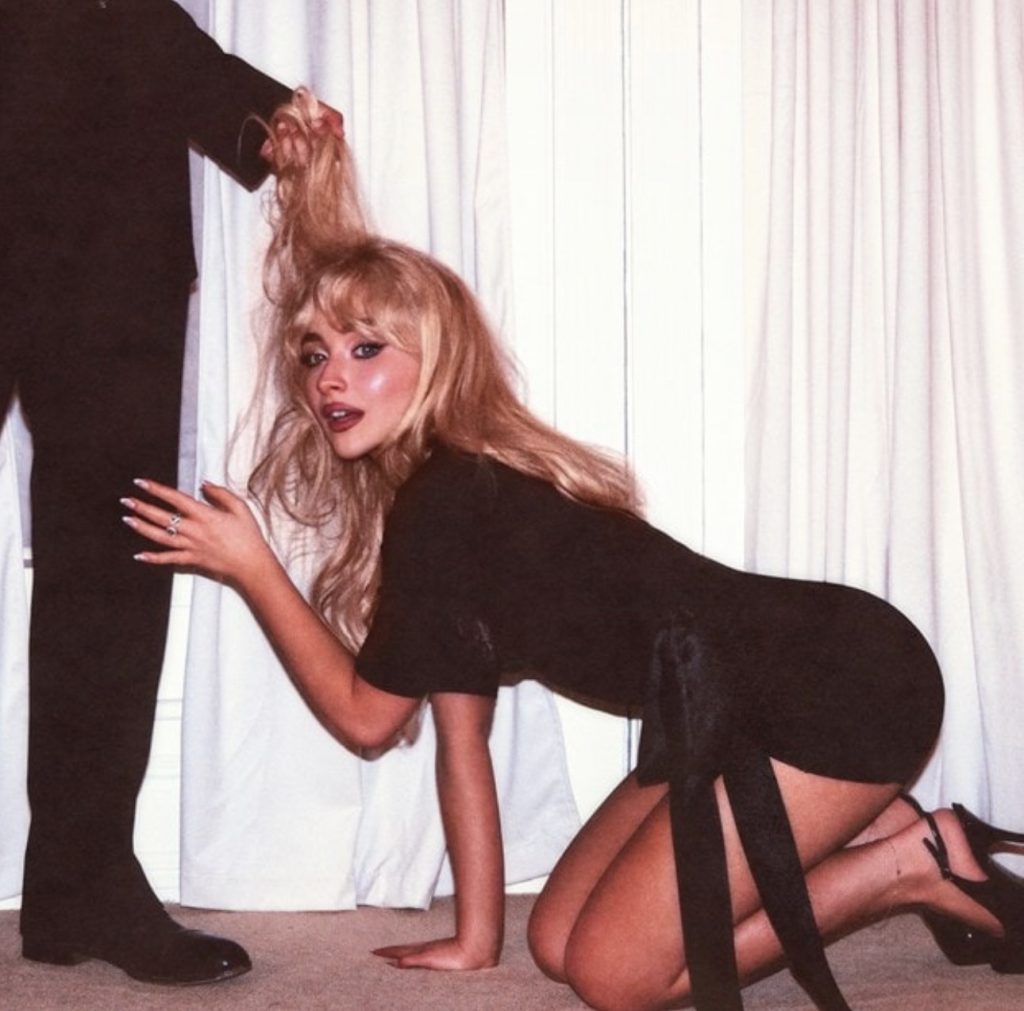
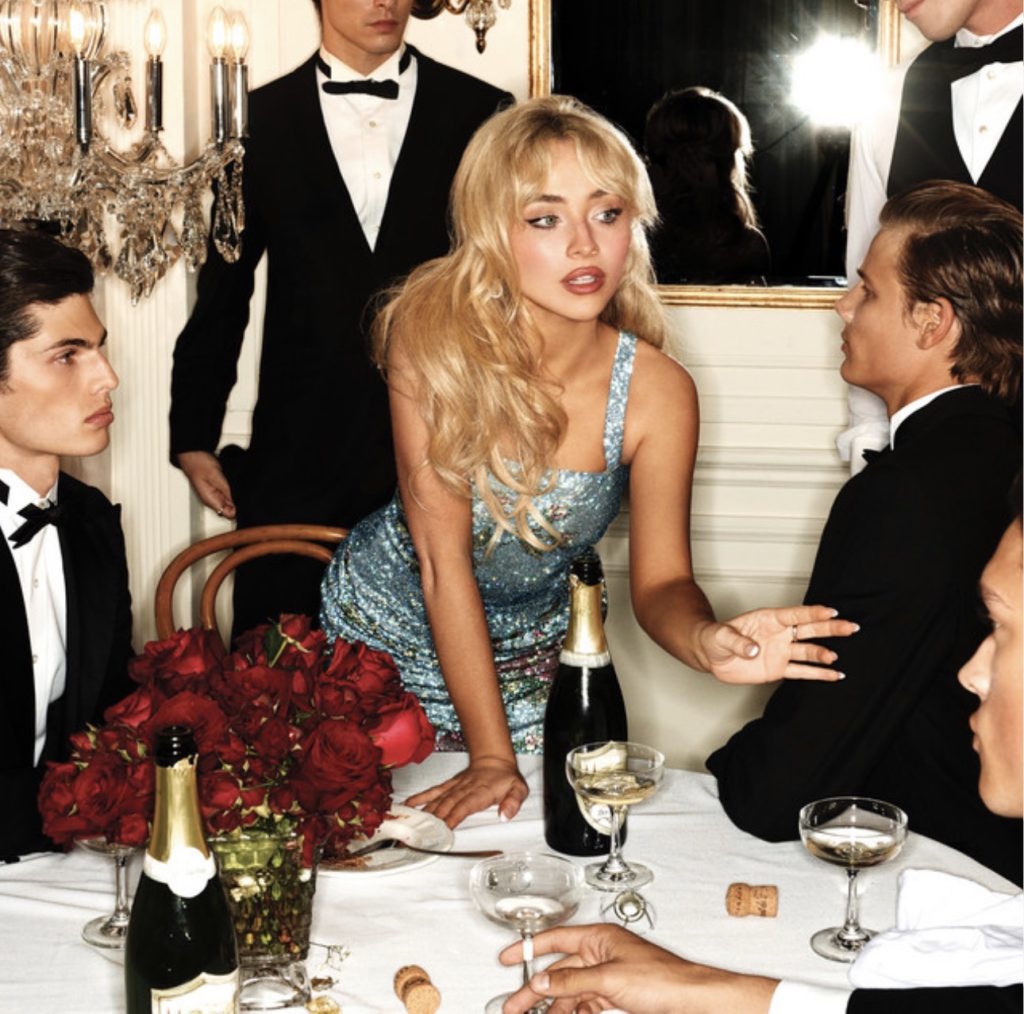
The whole aesthetic of this era was vintage 1950s/60s pin-up and old Hollywood glamour. At the start of the show Sabrina would reveal her shimmery corset bodysuit that was hidden underneath her towel, another factor that people deemed inappropriate.

Many themes throughout Sabrina’s show and marketing for her album link to key elements mentioned by Mulvey in her essay. For example, the essay states that women are displayed as sexual objects from pin-ups to striptease and mentions that looking itself is a source of pleasure. When reading what Laura Mulvey says about the male gaze in her essay and comparing it to how Sabrina Carpenter portrays herself, it’s easy to assume she’s trying to appeal to the male gaze, however, this is not the case.
Sabrina has a predominantly female fanbase, talks a lot about her experiences as a woman in her music and is constantly critical of men a lot. Although the aesthetic she chose for herself has heavily been associated with the male gaze, it seems for her that’s not what this is. When confronted about the backlash from her choice of album cover and being provocative in her Rolling Stones interview, she states that she “does not care and is doing what feels natural to her”. Since Laura Mulvey’s essay, times have changed, and it’s clear now that women are trying to reclaim the power that was once taken from them.
References
Karody, A. (2024) Available at: https://www.hercampus.com/school/ucd/sabrina-carpenter-and-the-female-gaze/
Martoccio, A. (2025) Available at: https://www.yahoo.com/entertainment/articles/sabrina-carpenter-dream-come-true-130000565.html
Musab, I. (2025) https://learning.westminster.ac.uk/ultra/courses/_102764_1/outline/file/_5638609_1?linkContentId=_5638609_1&courseId=_102764_1
Vanbuskirk, S. (2026) Available at: https://www.verywellmind.com/what-is-the-male-gaze-5118422


