
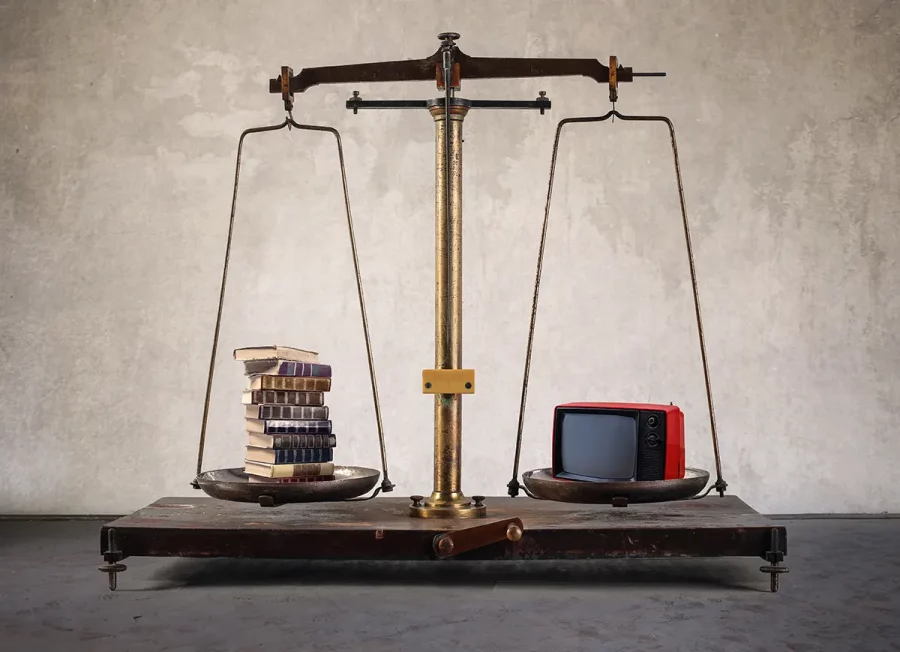
A seemingly straightforward question is posed by media theory: What if the technology, or medium, is more important than the message? Marshall McLuhan, who asserted that “the medium is the message,” is most famously linked to this concept. He was saying that communication technologies alter human behaviour, relationships, and perception in addition to the substance they provide.
For instance, consider how TikTok alters our attention span in addition to providing brief films. Its layout promotes rapid scrolling, immediate emotional responses, and snap decisions. The media alters your experience, even if you saw a video on TikTok that was initially posted on YouTube. Because of the way the platform is structured, the encounter is reshaped in terms of tone, pace, and meaning.
Medium Theory is useful because it challenges us to consider structural issues rather than just content. For example, television promotes a passive, structured, home-centered way of consumption rather than merely being a box that shows programs. On the other hand, smartphones enable continuous, mobile, and disruptive communication. Infinite scroll, algorithms, and notifications are design elements that reorganise daily life rather than “content.
Every medium, according to McLuhan, extends a human sense: the wheel extends the foot, the book extends the eye, and digital networks extend the mind. However, each extension is accompanied with an amputation. Social media increases our social reach, but it also destroys patience, long-term thinking, and privacy. We are encouraged to think about these trade-offs via Medium Theory.
I find Medium Theory’s explanation of digital identity to be fascinating. Identity becomes manicured and visual on Instagram. Identity becomes reactive and textual on Twitter/X. Identity becomes algorithmic and performative on TikTok. Depending on the media used to express it, the “self” is different. Medium Theory enables us to understand that our digital identity is more than just who we are; it is who we are on a platform that has been created in a certain way.
Despite its seeming broadness, Medium Theory is still very helpful today. It pushes us to look at the platforms—their interfaces, infrastructures, and economic models—instead of attributing social problems (misinformation, toxicity, addiction) to content. McLuhan’s claim that media technologies radically alter communication conditions is only strengthened by the emergence of AI recommender systems, datafication, and automated feeds.
Additionally, Medium Theory emphasises the political economy of design decisions. Platforms are products made by businesses with motivations, economic models, and regulatory blind spots; they are not neutral tools. For instance, short, dramatic material is preferred by attention economies because it generates more advertising than slow investigative journalism. This structural realisation alters the way we evaluate media: we should condemn not only poor content but also the interface choices and financial incentives that support it.
In the end, Medium Theory increases my awareness of how I use technology. I make an effort to focus not only on what I eat but also on how the medium is influencing my expectations, feelings, and behaviours. The message is important, but the channel is always more important.


Such an understanding of information and media can help us better resist the life brought to us by algorithms. For instance, tiktok’s push of body shape judgment videos to women makes them anxious about their figures, and its push of toy sets to families with children in an attempt to get them to buy, etc. The identity recognition in channels and digital media makes me understand what kind of person I am considered and classified into in algorithms People should resist the consumption and pain that have been created