
In a world ordered by sexual imbalance, pleasure in looking has been split between active/male and passive/female.
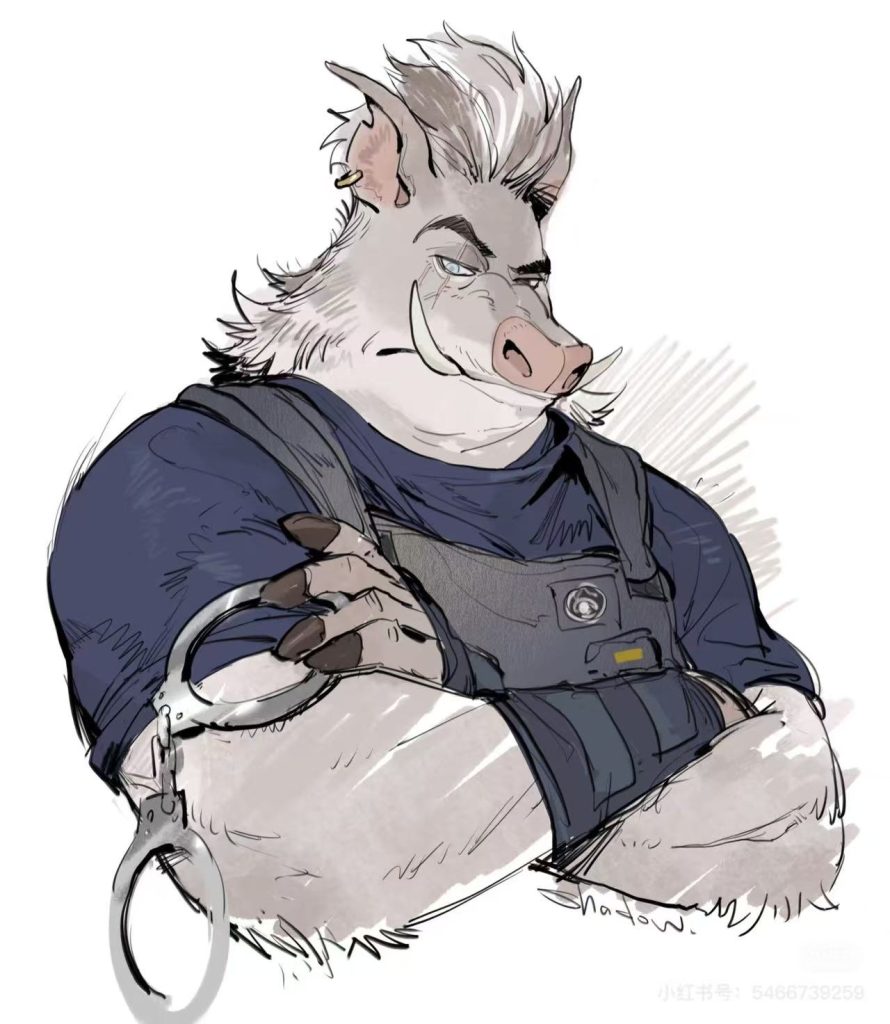
The recently released movie Zootopia has sparked widespread discussion. Coincidentally, we’ve just studied the chapter on the male gaze, and I’d like to discuss the successes of this Disney film in its portrayal of female characters. The first character I want to talk about is Officer Clawhauser, the police station’s dispatcher, whose design is likely based on a wild boar. You can easily recognize that Clawhauser is a wild boar – he has tusks and bristly hair. You can also easily recognize that he is a police officer – he wears a police uniform, is skilled in combat, and, in critical moments, possesses his own judgment and love for his colleagues, choosing not to kill Judy and Nick as instructed. He doesn’t have bows, a pink skirt, sparkling eyeshadow, or other such symbols to prove he is a female pig. Instead, his professional and socialized aspects are depicted through his actions. When you finish the movie and realize this striking supporting character is a woman, you can’t help but marvel at how much she embodies womanhood – intelligent, steadfast, and excellent.
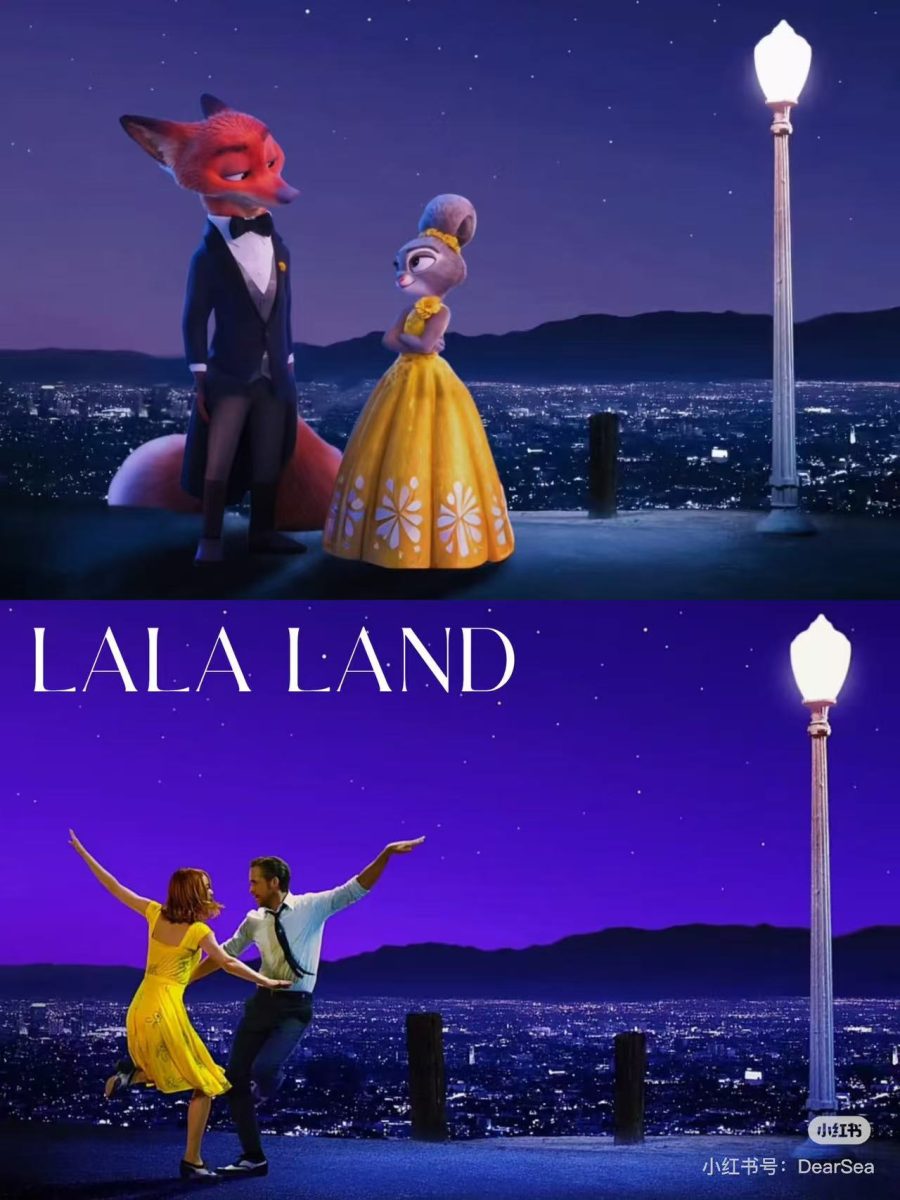
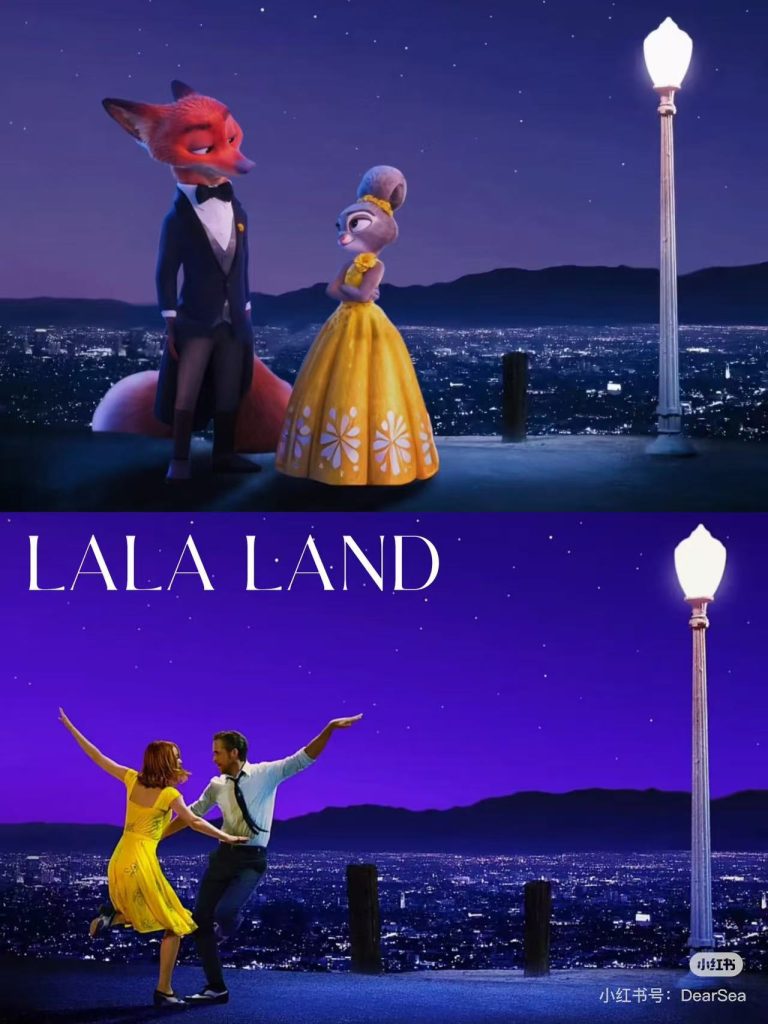
The setup of Judy and Nick as a good partnership is also an example of resisting the male gaze. They are close and inclusive of each other, but the film never defines their relationship as romantic. This resists the narrative of the perfect ending where the male and female leads get married and have children. At the same time, Judy and Nick present a reversal in gender roles. Nick, as a male, takes on emotional regulation, possesses cleverness, and assists Judy in becoming a police officer. Judy, as a female, is full of justice, loves her job, and is even somewhat obsessive. In traditional films, the male lead is often a police officer, lawyer, judge, etc., while the female is their gentle partner or supporter, providing help at crucial moments. In the banquet scene, their styling pays homage to the male and female leads in La La Land, which is also a film that subverts stereotypical gender roles, with the female lead being cheerful and courageous in pursuing her dreams, while the male lead is thoughtful, gentle, and sensitive.
Filmmakers often attempt to avoid presenting female characters as “mere” sexual objects by giving them complex back stories, strong motivations and an active role in the plot of their story. the other female characters in the film are also portrayed with great diversity: Miss Lucy, who loves pink bows and looks like a princess but is actually a gangster heiress; Weasel Newsam, the self-media adventurer who lives for the moment; Gairy’s grandma, the wise and gentle inventor; and Mayor Bellwether, who is full of ambition and political scheming, etc. These characters enrich the entire world-building framework of Zootopia and also shatter the traditional character-building structure of films. The market needs movies like this.
reference:
Kim.Leonard April 2025
https://www.studiobinder.com/blog/what-is-the-male-gaze-definition/
Loreck, Janice, The Conversation, 2016 https://doi.org/10.64628/AA.3k3qasy3s


I had a great time reading this! You raise an excellent issue on the actual variance in character development. Because Officer Clawhauser’s identity is so free of gendered stereotypes—no bows, no special makeup, just a dedicated, competent, and kind police officer—I frequently forget that she is a woman.
That one character serves as a potent microcosm of the success of the movie as a whole. It demonstrates that the secret to shattering the male gaze is not only to make female characters “strong,” but also to make them human (or animal) first, defined by their behavior and character rather than by their outward looks as objects of desire. Well done on your analysis of this difficult subject!
Your post brought up so many things about Zootopia that I had never thought about before, and honestly, it made me want to watch it again and look beyond the things it implied.
Your interpretation of Clawhouser was also very original. I’ve seen the movie a few times, but it never struck me how he quietly embodies traits that we usually associate with female representation. The way you explained his role as the emotional center (loving, caring, supportive) made me sympathise with him more than I did before.
I also loved the discussion of the dynamic between Judy and Nick. The comparison to La La Land was unexpected, but it made your point about the inverted gender roles even stronger.
What I appreciated most was how clearly you laid it all out. There were so many interesting observations, and the whole post was engaging without it feeling too dense. I thought I understood the main meanings that the movies had but you definitely showed me that I had missed some.
Thank you for sharing your spin on them. It was a really great read and gave me a new perspective.
This analysis of Zootopia and its female character design is truly insightful. I greatly appreciate your point about how the film resists the male gaze—not in a didactic way, but through skillful handling of character development, relationships, and role reversal. Your discussion of characters like Officer Crawhauser and the diverse cast of female characters demonstrates how the film breaks down traditional gender stereotypes without sacrificing storytelling. It’s refreshing to see a mainstream animated film build a world where female characters are complex, witty, ambitious, flawed, and each possesses great power. This blog post also strongly emphasizes the importance of this kind of female character development.
Your explanation of the male gaze and how the movie Zootopia 1 and 2 use it with a lot of the characters and changing up the ‘normal’ gender roles that are presented. Like how you talk about Judy being the more energetic and determined character compared to Nick who takes on the role of the supportive and calming friend that helps the ‘lead’ character achieve their dream and or goals in life and are always there even in the background supporting. And it is also interesting how you linked that one scene with Nick and Judy to a similar scene from the movie La La Land. And I really like your analogy of the character wild boar police officer and how as the audience we see them as a male character but then at the end of the movie it is revealed that this character is in fact female. And I just wanted to point out that the officer that you talk about at the start is actually called Captain Fern Hoggbottom and that the character Officer Clawhauser is a cheetah that mans the front desk in the police precinct.
I love this blog. It deeply analyses the diverse shaping of female characters in Crazy Animal City from a keen perspective, and cleverly integrates the theory of “male gaze” into the interpretation of film and television. The author not only chooses a unique character entry point, but also can understand the gender consciousness of the creator from the narrative structure, character relationship and aesthetic symbols. The analysis of the relationship between Judy and Nick is particularly bright, and the argumentation is also sufficient.