
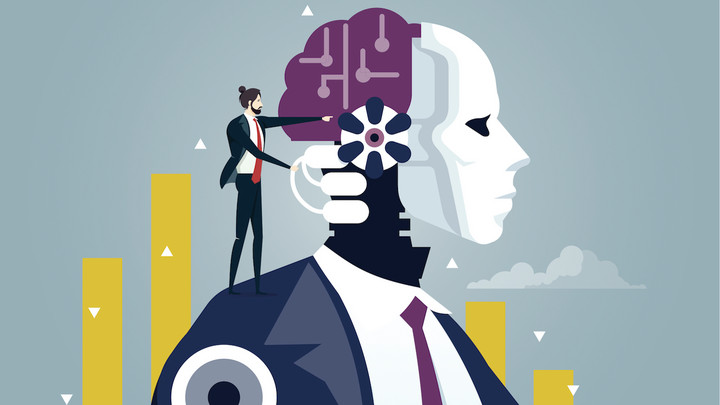
In today’s society algorithms are going through as they are more and more integrated throughout all the aspects of daily life like the selection of what one sees on social media or even inside the financial institution in terms of approving loans. As a result, there has been an increased significance of the phenomenon of algorithmic bias. In spite of the fact that an algorithm is often characterized as a neutral and objective mechanism, the reality on the ground is a lot more complex: it has the ability to reflect as well as aggravate existing human biases.
What Is Algorithmic Bias?
The algorithmic bias is a systematic disadvantage made against specific individuals or groups by a programmed decision making system. Prejudices may be expressed in many fields of application among them being:
– Recommendation engines
– Hiring tools
– Facial recognition systems
– Intelligent law enforcement
– Credit scoring algorithms
Within those settings, the result of the algorithm might seem mathematically reasonable, but the data upon which it has been trained or the design choices can be biased in a way that produces dangerous results.
What Are the Sources of these Biases?
Biased Data
The history of past data trains algorithms. Once the past discrimination or inequality are coded in such datasets, the algorithm will internalize and make such patterns a norm. As an illustration, a hiring model that has been trained by a history of data related to a male-dominated workplace can reveal bias in favor of males.
Flawed Assumptions
Developers will take some very important decisions about what features to add, what does it mean to be successful and how to weigh the differences. The model may be biased due to unintended consequences of such decisions.
Uneven Representation
In case a dataset fails to represent certain demographical groups, it may even worsen the performance of the algorithm in those specific groups. As an example, facial -recognition systems are prone to classify a person of a dark-coloured complexion to an incorrect group due to the training mass mostly being filled with grey-skinned people.
Feedback Loops
Some of these algorithms enhance patterns they create. On predictive policing mechanisms, such as targeting neighborhoods with greater crime rates with law-enforcement, which consequently drives up levels of police action, which consequently drives up crime records, regardless of the true crime rates, has been identified.
The importance of Algorithmic Bias.
Prejudice is not just an issue of technicality; it has got real-life implications. People can have their loans, housing, job opportunities or education denied without any need. Monitoring devices can wrongly spot individuals resulting to false arrests. The marginalized communities will be able to withstand heightened discrimination and diminished trust in technology. The effects of algorithmic decisions are enormous when they are used at the level of millions of users.
Final Thoughts.
Algorithms bias is not a mysterious vice but the reflection of human decisions, historical conditions, and objectives of social order that is inherent to technology. With the desired meticulousness in development, clear methodologies, and supporting ethical considerations, the construction of systems that avoids inequity can be built instead of enhancing inequity. With the ever-changing technology, our responsibility is still evident, create design algorithms that are as fair and inclusive as possible.


