
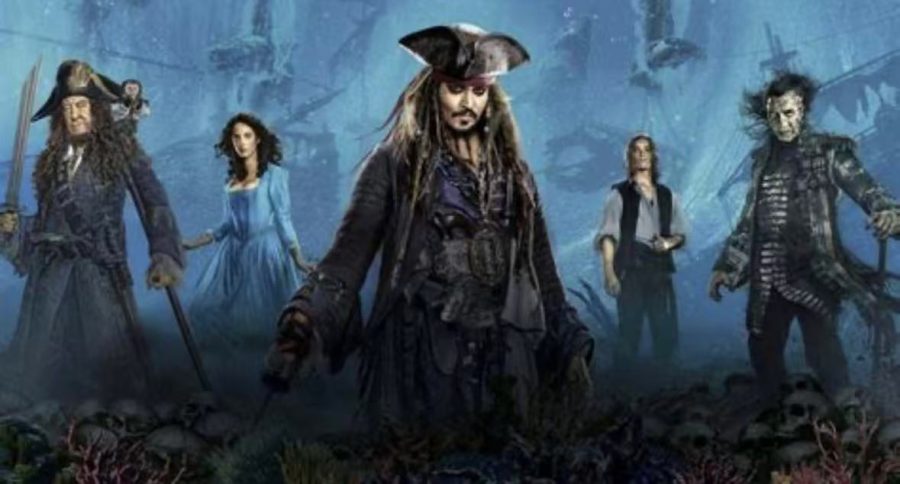
We miss Elizabeth Swan in Pirates of the Caribbean, the “white moonlight” that fell out of the wardrobe and defined the aesthetics of countless people. But what we miss may not be a real character, but the carefully coded “female image” revealed by Laura Mulvey. Her beauty is to be watched, her dilemma is to promote male adventure, and her existence itself serves male desire and narrative power. The visual landscape. However, this seemingly stable symbol system has encountered a double explosion from its interior in recent years: one is the sharp criticism of the actor Kayla Knightley after the fact, and the other is that when we look at it with today’s eyes, we find that the film itself also hides a subversive gender symbol – Captain Jack Sparrow.
Complaints about the corset and the body
Elizabeth’s classic image perfectly fits the imagination of women in the traditional adventure narrative. But Keira Knightley’s revelation tore up the romantic tulle. She pointed out that the corset that gave the character a perfect curve brought her real physical pain in reality. This voice complaint completed a key “subjective reversal”. She changed from a gazed object to a critical subject with the right to speak. That costume has become the most wonderful metaphor for male gaze. In order to shape a visual symbol that meets desire, it does not hesitate to physically discipline and oppress the female body. Her criticism tells us much more vividly than any theory that male gaze is not an abstract “seeing”, but a set of power practices embedded in cultural texture.
Captain Jack’s “non-traditional” masculinity
Ironically, when the female characters are bound by tradition, the male heroes of the film take the initiative to break free from the shackles. Captain Jack Spello is far from a traditional masculine pirate. He wears eyeliner smoky makeup, his hair is decorated with beads, and his demeanour is strange and enchanting, which is exactly a “distortion” of the traditional male hero’s temperament. This image breaks the audience’s stereotyped expectations of pirates’ “savage tough guys”, which coincides with the view that Captain Jack represents “a performance, de-masculine masculinity” when analysing the film “Pirates of the Caribbean” (Schuba Rt, 2017).
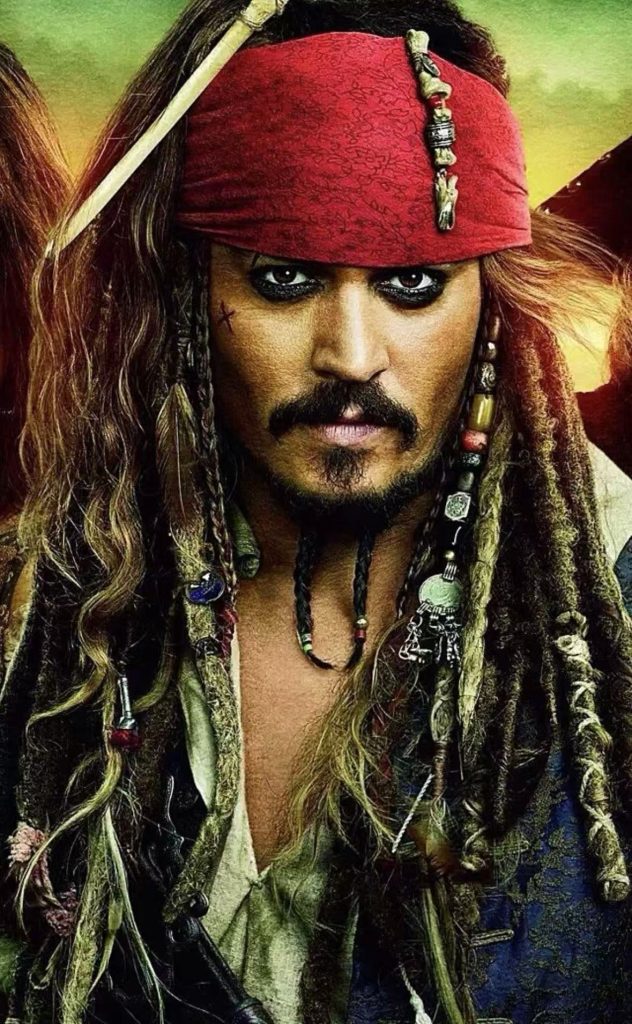
This kind of subversion is not accidental. It echos the modern discussion of masculinity in the academic community. As Connell (2005) explained in his pioneering work, masculinity is not single, but diverse, in which there is a marginalised “sobordinate masculinity”, which is often suppressed because it does not conform to the mainstream hegemonic ideal. The image of Captain Jack can be regarded as a challenge and supplement to this hegemonic masculinity. In the end, Kayla Knightley’s speech and the image of Jack Sparlow together formed a dialogue about gender and power. Just as Martin F. Norden (2007) pointed out when exploring the gender role in Hollywood that the gender characterization in the film has been evolving slowly but continuously, and the audience’s decoding and the self-awakening of the stars are the key forces that drive this change.
Conclusion
The text of Pirates of the Caribbean therefore presents an interesting tension: on the one hand, it repeats the ancient narrative of putting women in the position of being watched through Elizabeth, and on the other hand, it jokingly subverts the stereotype of masculinity through Captain Jack.
In the end, Kayla Knightley’s speech and the image of Jack Sparlow together formed a dialogue about gender and power. It reminds us that the way of critical viewing lies in not only to identify those disciplined “white moonlight” and to appreciate those “pirates” who dare to subvert all routines. True freedom does not lie in playing the role of weakness or masculinity, but in having the power and courage to define oneself and break free from the invisible “tights”.
Reference
1. Connell, R. W. (2005). Masculinities (2nd ed.). University of California Press.
2. Norden, M. F. (2007). The Changing Face of Masculinity in the Contemporary Hollywood Blockbuster. In The Changing Face of Evil in Film and Television (pp. 169–182). Rodopi.
3. Schubart, R. (2017). Mastering Fear: Women, Emotions, and Contemporary Horror. Bloomsbury Academic.


You provided a very strong example with Captain Jack Sparrow and Elizabeth Swan, showing the contrasting presentations of the characters. While one is able to break through stereotypical and traditional masculinity, the other is bound to expectations fuelled by the male gaze to the point where it transcends the movie screen, as you explain how her costume was painful for Kayla Knightley. You structured and explained the content in this blog clearly, and you show a relevant example of Laura Mulvey’s male gaze theory.
This piece is conceptually rich – I love how you contrast Elizabeth-as-“white moonlight” with Jack’s non-hegemonic masculinity, and tie it to Connell and Norden. The point about Knightley’s corset critique turning her from object to subject is especially sharp. For clarity, you could slightly tighten the structure (e.g. clearer subheadings or signposting) and add one explicit sentence connecting back to Mulvey’s male gaze in the conclusion, just to underline how your analysis expands and complicates her framework.
You’ve really laid out nicely how Pirates of the Caribbean functions as a kind of “gender power game,” with social norms, superstitions and cinematic tropes constantly policing who gets power, agency and mobility. I especially appreciated the way you highlighted moments where Elizabeth Swann (and other women characters) try to claim space in a world designed by and for men: from disguising herself as a sailor to challenge the rules, to repeatedly acting with courage and agency even when the deck seems stacked against her. I think it matters that you don’t simply label the film as good or bad, but show that it is complex: it both reinscribes traditional gender power dynamics and occasionally subverts them, offering glimpses of resistance.