
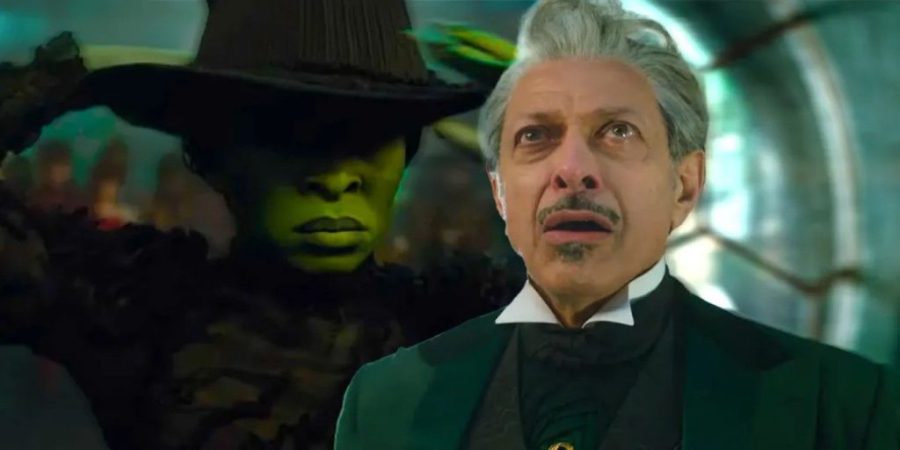
The ideas of encoding and decoding can be seen in the 2024 film Wicked and the stage production of Wicked the musical on Broadway and in the West End. There is quite a lot of narrative coding that is used within the story that takes place within the first Wicked movie and also in the first act of Wicked the musical, a few of these codes include Animal rights allegory, Good vs Evil, Discrimination, Defying Gravity and Individuality, and Fascism and Propaganda. These narrative codes can be seen quite clearly as the main character Elphaba is born with green skin and from the moment she was born she was discriminated against by her parents, and as she grew up she was also picked on and bullied and discriminated against by the munchkin children.
Along with Elphaba the talking animals that had been a big part of Oz have started to be discriminated against and having their rights to live in Oz and to teach in the university taken away and they are being forced into cages in a room within the emerald city.
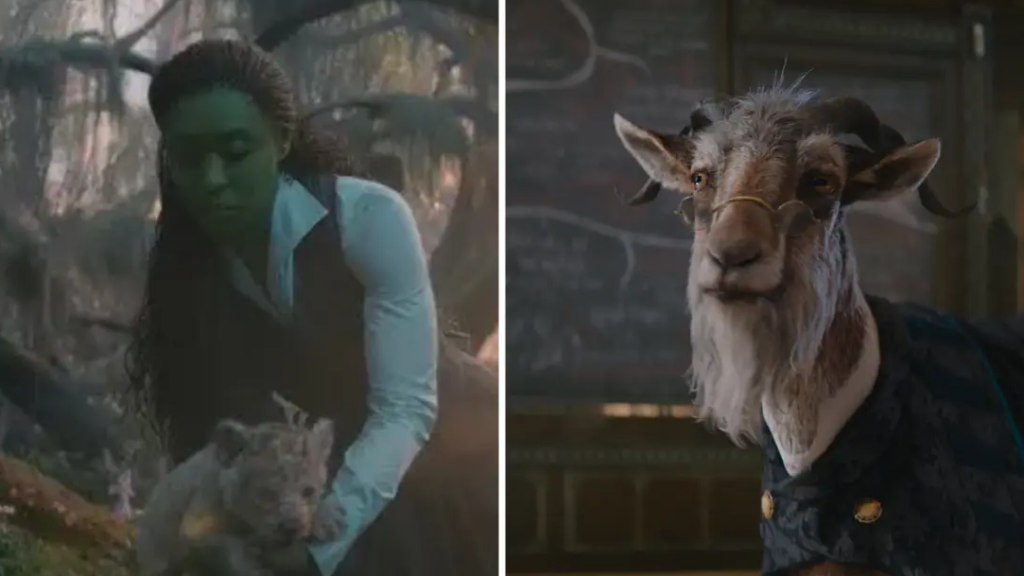
Two examples of this are the characters of Dr Dilamond who is dragged out of his own lecture by two emerald city guards who pull him by his horns and the young lion cub who was trapped in a cage so that he would not grow up and be able to talk, and this also goes alone with the narrative code of Propaganda as the Wizard of Oz and Madame Morrible have created the common enemy of the animals especially the ones that can talk. They also use things like the big mechanical head to make the wizard seem more intimidating to the civilians of Oz and to make it seem like he is a very powerful wizard but in reality he does not have any power.
Unlike Elphaba and Madame Morrible who are the only two characters in the musical and movie to be having powers. And this leads to the last two narrative codes of Good vs Evil and Individuality, these can be seen throughout the film like when Elphaba casted a spell that put her whole class and the new teacher to sleep except for Elphaba and Fiyero who come together to save the lion cub from the cage and set him free in the nearby forest. These codes come up again towards the ending on act one in the musical and the end of the first movie, where Elphaba and Glinda go to meet the Wizard but then they learn that the wizard has no really power and that he just wants to use Elphaba for her power but she refuses to join him and help him with his plan to stop the animals from talking. And so she takes the grimmerie and runs away. But while Glinda and the emerald city guards try to get her to go back, Madame Morrible announces to the people of Oz that they should look out for Elphaba and that she has defied the Wizard and her green skin is an ‘outward manifestor’ of her ‘wickedness’. This ends with Elphaba flying off after she sings Defying Gravity about how she does not need anyone with her to succeed and then she flies off to the ‘Western skys’ and she in then labeled by the people of Oz as the Wicked Witch of the West and Glinda who stays behind becomes a public figure for the people of Oz and gets the name of Glinda the Good.


I think your blog gives a clear and engaging explanation of how encoding and decoding appear in Wicked. The examples you chose, especially Dr Dillamond being dragged away and the lion cub being kept in a cage, make the themes of discrimination and propaganda very easy to see. You also explained well how Elphaba’s green skin and individuality are used to encode ideas about being different and being judged by society.
I also like how you showed the connection between power, fear and messaging in Oz, especially through the Wizard and Madame Morrible. These scenes illustrate how media and authority figures can shape what people believe. One thing that could make your analysis even stronger is to talk briefly about how audiences might decode these messages differently, since some viewers may see the story as social commentary while others may simply enjoy it as fantasy.
This blog offers a thoughtful exploration of how Wicked encodes and decodes themes such as discrimination, power, and identity. You clearly connect narrative elements—like Elphaba’s marginalization and the oppression of talking animals—to broader social issues, which strengthens the analysis. The discussion of propaganda and the Wizard’s manufactured authority is especially compelling.
Additionally, I think you could tighten the structure by grouping related codes more clearly and reducing repetition. Some sentences are long and could be simplified for clarity. Adding brief comparisons between the stage musical and the 2024 film would also enrich the analysis, since you reference both. Overall, your insight into the narrative codes is strong, and with a bit more polishing, the commentary would feel even more cohesive and academically grounded.
Wow, this deep dive into Wicked’s encoding/decoding is so clever—loving how you unpack the “Good vs Evil” labels as more than just character tropes, but actual narrative propaganda! It’s fascinating to trace how Elphaba’s “wicked” framing ties to her refusal to conform.
A tiny, fun add: you could note how Glinda’s “good” performance (like her public persona) mirrors how media often packages “acceptable” identities for mass consumption.
This is such a thoughtful, layered read—super engaging!