
A few days ago, while browsing a home decor blogger’s video, she mentioned that her cosmetics were in a mess and it took her a long time to find her lipstick. She then showed a three-layered storage box, saying that her desk had been tidy for two months since she started using it. Looking at my own messy makeup table, I immediately placed an order. Thinking back over the past six months, from shampoo to weekend plans, many of my choices have been influenced by this blogger.
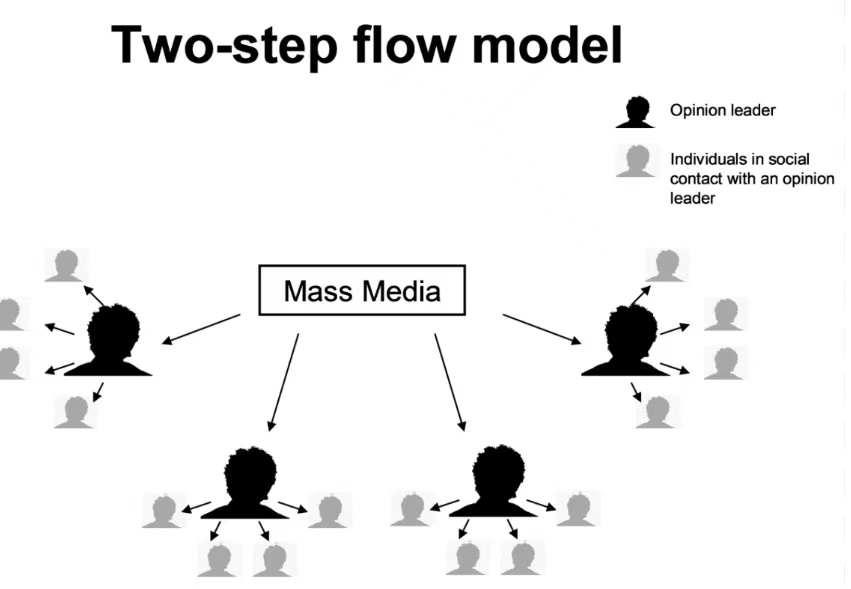
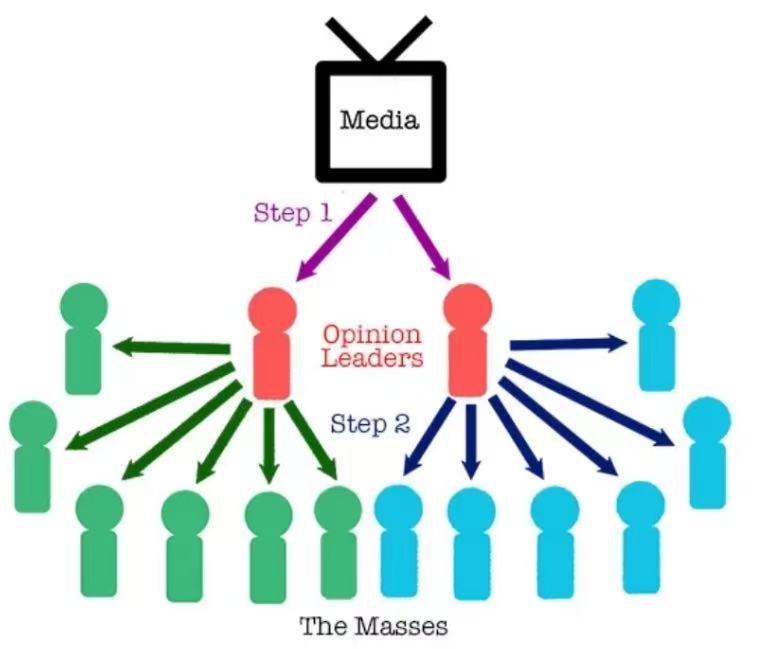
This phenomenon can actually be explained by the two-step flow theory first proposed by Katz & Lazarsfeld (1955), which believes that information does not flow directly from the media to the public, but is filtered through opinion leaders. The core of this theory lies in the fact that information does not directly flow from the source of communication (such as the brand) to the general audience, but rather needs to pass through an intermediary node, the opinion leader, who decodes the information a second time before passing it on to the masses. Bloggers are opinion leaders in our daily life scenarios. They have the ability to filter, interpret and re-encode information, and can transform the abstract demands of brands into specific needs that the audience can perceive.
Take the choice of shampoo as an example. Brands merely make general claims about controlling oil and dandruff, while hair care bloggers, based on their own experience as people with oily hair, will concretize it as maintaining a fresh scalp for three days after one wash and no frizz even after blow-drying. This persuasive effect is consistent with Chaiken’s (1980) “heuristic treatment”, that is, the audience relies on credible sources rather than analysing the information itself in depth.

This process strictly follows the two-step path of the theory. In the first step, the source of communication (brand) conveys information to opinion leaders (bloggers), who complete the experience and screening from the perspective of ordinary audiences. In the second step, opinion leaders disseminate the processed information to the public. As the audience perceives that the information is highly consistent with their own needs, they are naturally willing to take action (such as purchasing or trying).
Nowadays, when faced with a blogger’s recommendation, I deliberately pause to think: Is it driven by a genuine need or merely influenced by the experience of an opinion leader? For instance, I didn’t purchase the ins-style tableware recommended by a blogger because I already have enough bowls and plates. However, for items like storage boxes that can truly solve problems, following the recommendation actually saves me the effort of screening them myself.
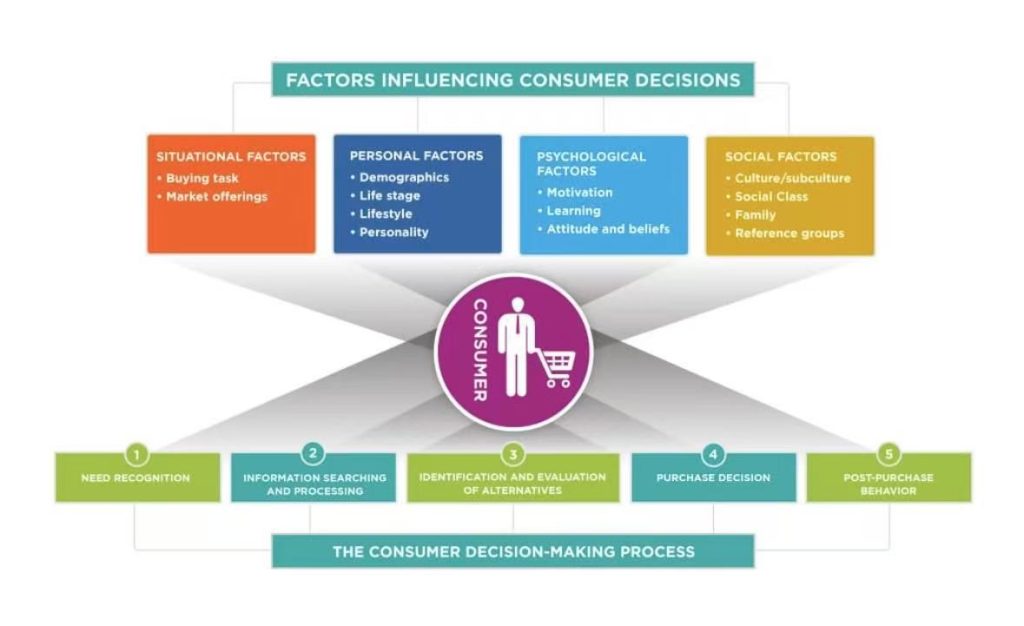
Essentially, this is not about being tricked by a set pattern, but rather opinion leaders playing the role of filters in the torrent of information, helping the public reduce cognitive costs and the risks of trial and error. When we are clear about our own needs and can identify reliable opinion leaders, this two-step transmission model actually enhances the efficiency and accuracy of our daily decision-making.
Reference:
Katz, E., & Lazarsfeld, P. F. (1955).Personal Influence: The part played by people in the flow of mass communications.
Chaiken, S. (1980). Heuristic versus systematic information processing and the use of source versus message cues in persuasion. Journal of Personality and Social Psychology, 39(5), 752–766.


Hi, I enjoyed reading your blog. You have a very good grasp of the topic. I loved how you showed the example of a blogger. It’s absolutely true that our decisions are influenced by social media stars when it comes to purchasing new products. The theory perfectly explains it. Overall, it was an exciting blog. The text was easy to understand.